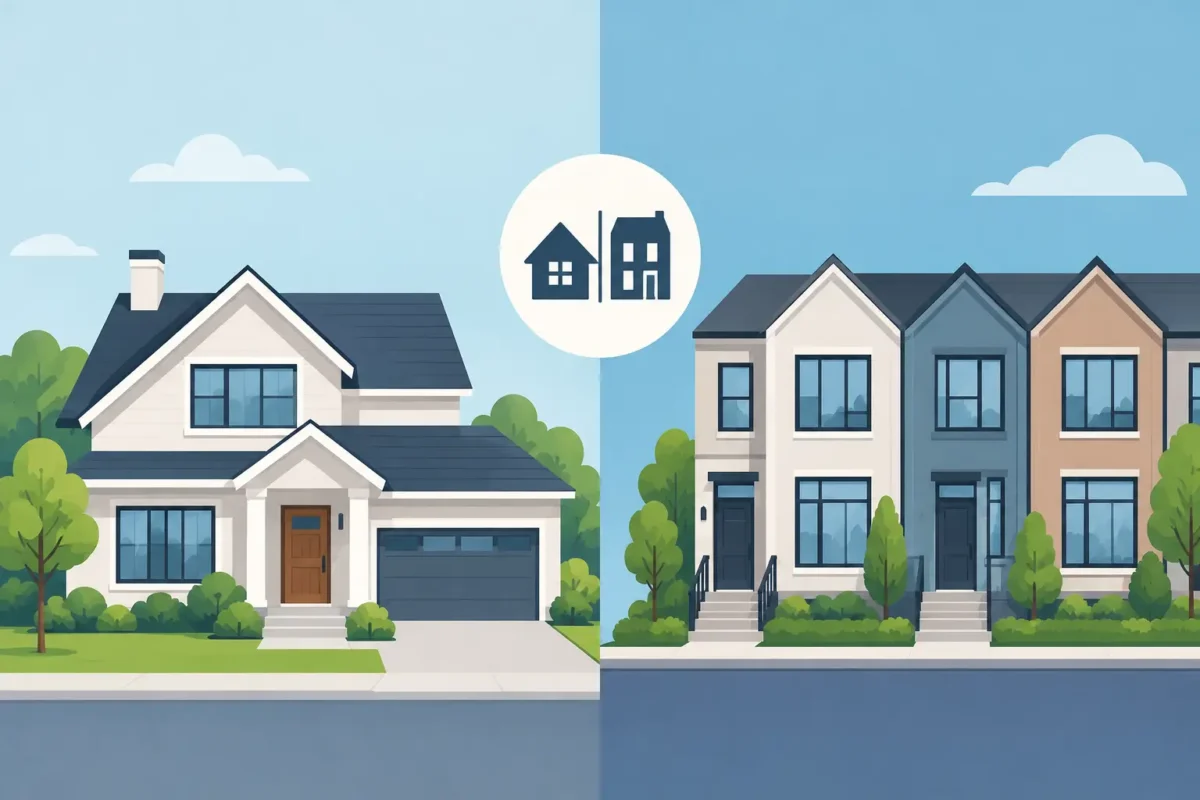
A larger backyard, an extra bedroom and room for the family dog can make a standalone home feel like the obvious choice. But in Melbourne’s northern growth corridor, the house versus townhouse decision is rarely that simple. Land size, location, maintenance, borrowing capacity and future plans all carry real weight – particularly in suburbs where new estates, transport links and local amenities are continuing to reshape buyer demand.
The right property is not necessarily the biggest one you can afford. It is the one that supports how you want to live now, while remaining a sensible asset for the next stage of life.
A house is generally a freestanding dwelling on its own title and land parcel. You have greater control over the building, garden, fencing and external improvements, subject to council requirements and any estate covenants. In many cases, there is more internal space, a larger outdoor area and better separation from neighbours.
A townhouse is commonly a multi-level dwelling attached to, or closely positioned beside, another home. Modern townhouses can still offer three or four bedrooms, garages and private courtyards, but they usually sit on smaller land parcels. Some are part of an owners corporation, while others have their own title with minimal shared infrastructure.
That distinction matters because buyers are not simply comparing bedrooms and bathrooms. They are comparing land, privacy, upkeep, location and long-term flexibility.
For growing families, a house often provides the practical advantages that are hard to replicate in a townhouse. A bigger block may mean room for children to play, space for entertaining, off-street parking for multiple vehicles, a shed or a future extension. In areas such as Craigieburn, Wollert, Mickleham and Kalkallo, buyers often place strong value on usable backyards and family-friendly street appeal.
A house can also provide more breathing room between you and the neighbours. This is valuable for households with young children, shift workers, pets or anyone who wants a quieter home environment.
However, more land is only a benefit if you will use it. A large backyard requires mowing, weeding, pruning, repairs and ongoing water use. For a busy professional couple, downsizer or first-home buyer who prefers weekends away rather than garden work, a townhouse courtyard may be the better fit.
Townhouses can also offer a more efficient use of space. Newer designs often include open-plan living, upstairs bedrooms, secure garages and low-maintenance outdoor areas. If being close to schools, shops, cafes, train stations or major roads matters more than having a large lawn, a well-located townhouse may deliver the lifestyle you want without the extra workload.
Townhouses are often more affordable than comparable houses in the same suburb because they come with less land. That lower entry price can help first-home buyers enter the market sooner, reduce the deposit required or keep loan repayments more manageable.
Yet buyers should avoid treating the purchase price as the full financial comparison. A house may have higher council rates, insurance premiums, utility costs and maintenance expenses. Roof repairs, gutter cleaning, fencing, landscaping and driveway works are all your responsibility to budget for.
A townhouse can have lower external maintenance, but it may also include owners corporation fees. These fees can cover common insurance, gardens, shared driveways, building maintenance or administration, depending on the development. Before making an offer, review the owners corporation certificate, budget, meeting minutes and any planned major works. Low quarterly fees are not automatically a positive sign if the fund has not been maintained adequately.
For a townhouse without an owners corporation, confirm exactly who is responsible for shared walls, accessways, drainage and insurance. The title structure matters as much as the appearance of the property.
In established and growth-focused suburbs alike, land remains a major driver of long-term property value. A freestanding house with a useful block can appeal to a wider pool of buyers: families, investors, renovators and, in some locations, buyers looking for future redevelopment potential. This broader demand can support resale performance over time.
That does not mean every house will outperform every townhouse. A poorly located house on a busy road may be less appealing than a high-quality townhouse near transport, schools and shopping. Similarly, an oversupply of near-identical townhouses in one pocket can affect competition at resale, while a well-designed townhouse in a tightly held area may remain in strong demand.
For investors, the question is not simply which property type grows faster. Consider tenant demand, likely vacancy periods, maintenance exposure, rental yield and the type of tenant the property will attract. A low-maintenance townhouse near amenities may appeal strongly to professional tenants and smaller households. A four-bedroom house may attract families seeking longer-term rental stability, but could require greater maintenance and carry a higher purchase price.
Local evidence is essential. Comparable sales, current stock levels and buyer enquiry patterns can vary significantly between Epping, Lalor, Thomastown and newer northern corridor communities. Broad market headlines are useful, but they cannot replace suburb-level advice.
Owning a house gives you more autonomy. You can change the garden, install a pergola, update the façade or improve the internal layout, provided approvals are in place where required. This flexibility suits buyers who want to personalise their home or add value through renovations.
The trade-off is responsibility. When something breaks, there is no building manager or shared fund to call on. You need to organise repairs, manage trades and plan for major costs before they become urgent.
Townhouse ownership can reduce some of this pressure, especially where common areas are professionally managed. It may also provide added security through closer neighbours, enclosed garages or controlled access. On the other hand, shared walls can create noise considerations, and owners corporation rules may limit changes to external finishes, parking arrangements or pets.
Inspect carefully for sound insulation, natural light, storage, stair access and visitor parking. These details affect daily comfort and can influence how easily the home rents or resells later.
A townhouse can be a practical first step for buyers who want a modern home in a convenient location without stretching their budget for a larger block. It can provide more privacy and space than an apartment while keeping maintenance manageable. The key is to buy a layout that will still work if your circumstances change over the next five years.
A house may suit first-home buyers who can comfortably afford the higher purchase and holding costs, particularly if they expect to start a family, work from home or stay in the property for the medium to long term. Buying more land upfront can reduce the need to move again quickly, but only if the repayments leave enough room for maintenance, rates and everyday life.
Avoid buying based solely on fear of missing out. A realistic budget and a clear understanding of your preferred lifestyle will lead to a better decision than chasing the largest property your lender will approve.
Before deciding between a house and townhouse, assess whether the property will meet your needs over the next several years. Consider how many bedrooms you genuinely need, whether stairs will suit your household, how much outdoor space you will use and what level of maintenance you are prepared to take on.
Then look beyond the front fence. Check planning activity nearby, access to schools and transport, estate covenants, owners corporation obligations, parking, drainage and the quality of comparable homes that may compete with yours at resale. For investors, obtain a realistic rental appraisal rather than relying on advertised rent figures.
A thorough inspection and careful review of the contract and vendor statement can reveal issues that a polished online listing will not. This is where local guidance can help turn a good-looking property into a well-supported decision.
The strongest choice is the one that aligns with your budget, lifestyle and future plans. A house may offer more land, flexibility and family appeal. A townhouse may deliver a lower entry point, easier upkeep and a location that keeps you connected to daily essentials.
At SKAD Real Estate, we see buyers make better decisions when they compare individual properties rather than relying on labels alone. A quality townhouse in the right street can outperform expectations, while the right house can become a long-term family asset. Focus on the land, the location, the ownership costs and how the property will work for you after settlement day.



Comments are closed.